Yes, You Still Need a Website
Every so often, I hear some version of the same question: Do I really need a website? We have Instagram, LinkedIn, TikTok, Linktree, Google Business Profiles, email newsletters, and more digital platforms than most of us can reasonably keep up with. If people can already find you online, building and maintaining a website can start to feel like an unnecessary extra step.
I understand the question. I just disagree with the premise.
You need a website because you need a digital asset that you control and own. Social media can help people discover you, engage with you, and get a glimpse of your work, but those platforms belong to someone else. Your website gives you one place where you decide what people see, how they see it, how much context they receive, and what happens next.
And that matters whether you’re running a business, building a personal brand, establishing yourself as a coach or speaker, leading an organization, or simply beginning to build a professional presence.
Social Media Is Valuable.
But It Isn't Yours.
I use social media all the time, both personally and professionally. I believe in its value, and I think it can be one of the most effective tools for attracting an audience and helping people discover your work. What I don't believe in is building your entire digital presence on a platform you don't control.
If Meta decided tomorrow that Instagram was becoming a text-only platform, what would happen to the visual portfolio you spent years building? If it moved in the opposite direction and deprioritized written content, what would happen to the thoughtful captions where you explained your philosophy, expertise, or approach? Platforms change, features disappear, and algorithms shift. The way we use a platform today is not guaranteed to be the way we'll use it five years from now.
A website works differently because you determine its structure. You can create a gallery for your photos, publish long-form writing, feature a fundraiser, house your portfolio, explain your services, collect email addresses, share downloadable resources, link to interviews or press, sell products, or simply tell people who you are. You can add something this month and remove it next month. You can change your copy, reorganize your pages, or evolve the entire site as your work changes.
This is also why I'm not a big believer in treating a Linktree as a replacement for a website. If you're already sending someone to a page containing links to your portfolio, latest article, services, booking page, fundraiser, newsletter, and social channels, you've essentially identified the need your website should be serving. Those things can live together in one digital home that actually belongs to your brand.
A Website Gives People the Depth Social Media Can't
There is another reason I still Google businesses and professionals before I work with them: a website communicates a certain level of legitimacy, professionalism, and intentionality.
Social media can certainly reinforce those things, but it serves a different purpose. Most social platforms are designed around what's happening now. You're seeing someone's latest project, current season, recent accomplishment, or newest idea. Even if someone has been doing excellent work for ten years, a person discovering them today may only see what they've posted over the past few weeks.
A website lets you provide the rest of the story.
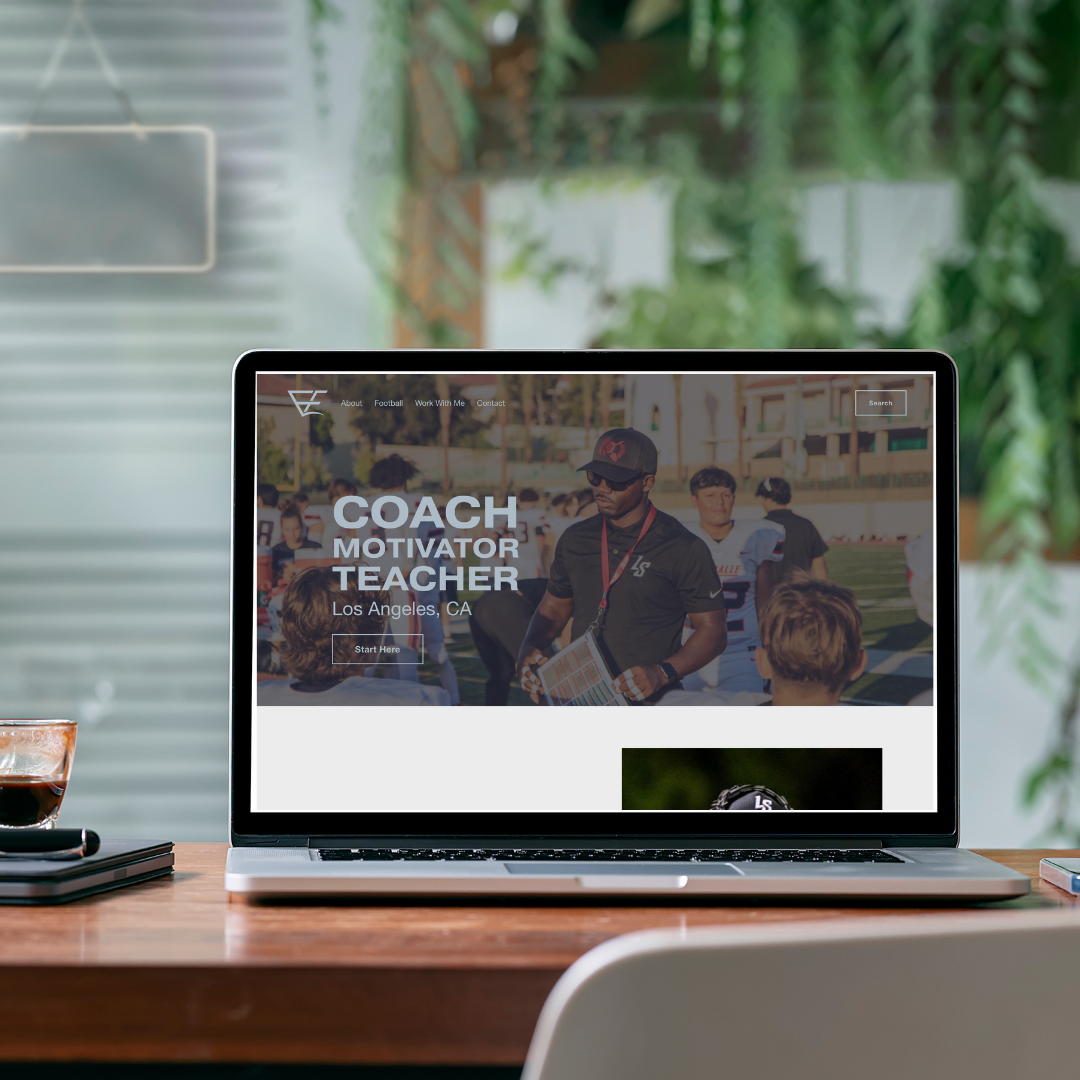
I've seen this firsthand with my husband, Eddie, who is a high school football coach. When we developed his website and broader digital presence, the goal wasn't simply to make him look polished online. The website gave him a place to tell his origin story, explain his coaching philosophy, document his experience, share his record, and give people a much fuller understanding of who he was as a coach and leader.
When he later interviewed for a new head coaching position, several of his interviewers mentioned the website. They had been able to learn things about him that would never fit neatly onto a résumé or appear in an Instagram post. By the time he entered some of those conversations, they already had context for his experience, philosophy, and approach to leadership.
That's what I mean when I talk about depth.
A school's coaching bio might tell you someone's title and employment history. Instagram might show you last Friday's game or this week's practice. But a personal website can show the complete person behind all of it. That distinction isn't limited to coaches. The same principle applies to consultants, entrepreneurs, nonprofit leaders, photographers, speakers, creatives, and professionals building expertise in almost any field.
When someone lands on your website, they shouldn't have to piece together your identity from six different platforms. They should be able to understand who you are, what you do, and how to reach you.
Your First Website Doesn't Need to Do Everything
One reason people put off creating a website is that we've made websites sound far more complicated than they need to be.
We start talking about conversion rates, funnels, SEO, lead magnets, automations, integrations, keyword strategies, and a long list of pages someone supposedly needs. Those things can absolutely matter, particularly as a business grows. But if you're at the beginning, I don't think your first concern needs to be whether your website has been perfectly optimized to generate leads.
Your first goal can simply be to establish a digital presence.
At minimum, I want to be able to visit someone's website and see a few good photos, understand who they are and what they do, and find a clear way to contact them. That's enough to begin. A coach could build a website before coaching their first official season and use it to explain why they coach, what they believe, and the experience that prepared them to do it. A new consultant can explain their expertise before they have dozens of case studies. As their experience grows, the website can grow with them.
Once you have services, products, speaking engagements, consulting packages, or another clear business offer, then your website should begin doing more. It can answer common questions, establish your expertise, and eventually generate inquiries or sales. At that point, conversion becomes much more important.
Search can also become part of the picture. A well-structured public website gives search engines content they can crawl, understand, and potentially surface when people are looking for relevant information. As search continues to evolve, website content can also appear within newer AI-powered search experiences. But I consider that an additional benefit, not a reason to overwhelm a beginner with an SEO strategy before they've even published their About page.
The foundation is much simpler: give yourself a place on the internet that you control, and make sure that place clearly represents you.
Simple Is Better Than Unnecessary
Another mistake I see is assuming that a professional website needs to be elaborate. Someone starts building a site and suddenly believes they need seven pages because another business has seven pages. Then they start filling those pages with everything they've ever done because they don't know what else is supposed to go there.
More isn't automatically better.
Every page on a website should serve a purpose. If you can accomplish what you need with three pages, build three excellent pages. If you're just getting started and don't have the budget for professional website design, a well-designed one-page site using a built-in template can be perfectly appropriate.
In fact, I would much rather see a simple, complete website than an elaborate one filled with outdated information, broken links, unfinished pages, and unnecessary copy. A good website should be current. The links should work. The pages should load properly. The information should be accurate. And visitors should understand where they are and what they're supposed to do next.
That also means building a website isn't a one-time project. One of the biggest website mistakes I see is building the site and then never looking at it again. Your work changes. Your experience grows. Services change. Photos become outdated. Links break. Your website should evolve alongside the thing it represents.
Put a reminder on your calendar every few months and actually visit your own website. Read the copy. Click the links. Look at it on your phone. And ask yourself whether it still accurately represents where you are today.
You Can Build It Yourself, Too
I design websites professionally, and I still don't think everyone needs to hire a professional website designer.
If you're comfortable with technology, have some creative instinct, and have the time to work through it, platforms like Squarespace have made building a basic website fairly accessible. Start with a template. Keep the structure simple. And focus on clear information rather than complicated features. You can always improve it later.
Professional help becomes more valuable when you aren't comfortable working on computers, don't have much design experience, need help with your copy or positioning, don't have the time to build the site yourself, or have reached the point where your DIY site is trying to do too much. If the site has become disorganized, outdated, difficult to navigate, or simply isn't communicating much about you, that may be a sign that you've outgrown what you originally built.
The important distinction is that needing a website and needing a professionally designed website are not the same thing. I think most people need the first. Whether you're ready for the second depends on your goals, resources, skills, and stage of growth.
Your Website Should Be Your Digital Home
For NewVision Creative Co., my website does things Instagram simply can't do as effectively. It houses my portfolio, explains my services, collects inquiries, allows me to sell digital products directly, and gives me a place to publish long-form ideas like this one. People regularly reach out through my website after reviewing my work, which means they often arrive in my inbox with more context than they would have had from seeing a single social post.
That's how I think the ecosystem should work.
Social media can attract attention and introduce someone to you. Email can continue the conversation and give you another way to share useful pieces of your work. Your website can hold the fuller picture. For a business, it can eventually become the place where interest turns into an inquiry, purchase, booking, donation, or another meaningful action.
But even before any of that happens, your website serves a more basic purpose. It gives someone a place to get to know you. They can read what they need to read, see what they need to see, understand what you do, and decide whether they want to know more.
You don't need to wait until your business is bigger. You don't need a complicated SEO strategy to start. You don't need ten pages. And you don't need to have every part of your professional future figured out before you publish something.
You just need a place that's yours.
If you've been putting off building your website, or you just realized the one you built years ago no longer represents the work you're doing today, this is a good time to change that. NewVision Creative Co. is offering discounted website design services for a limited number of Q4 projects, including full website builds and focused website support.
Your website doesn't need to contain everything you've ever done. It needs to contain what someone needs to understand who you are, what you do, and why they should keep paying attention.